
Interviews | Discussions
“Some of them do not want to revisit their past. Others may be very moved while narrating their stories or ask me to turn off the camera. I do not follow a typical oral history methodology in my testimonies. I simply wish to capture their faces and document their life stories – whatever they are willing to share with me, whether it is nostalgia about their happy lives before the deportation and the extreme experience of the Nazi concentration camps, or their lives after the war”.
Artemis Alcalay
The survivors’ video interviews with Artemis Alcalay, along with the photographic portraits, comprise a key part of the “Greek Jews Holocaust Survivors” project. In most cases, the interviews take place in the form of a chat, an open discussion, and are conducted in the survivors’ private homes, after they are photographed. However, the recent pandemic restrictions have also given rise to online interviews. The survivors’ close ones, who are present during the conversation, often participate. Narratives are thus enriched with testimonies of spouses, siblings, and children. The space is neither set up nor prepared beforehand for the interview. Apart from some opening questions, there is no specific questionnaire, given that the primary focus here is communication and an in-depth discussion.
Survivors are encouraged to present an open narrative of their life story, somewhere in between the open life-story interview method and “dialectical performativity”. In effect, survivors themselves choose which events and themes of their lives they are going to share. Thus, the narrative approach becomes an artistic method and a means of communication. Through this lens, the interviews, at times short, at times extensive, form an integral part of the whole project, wherein the visual and verbal narratives, both for the artist and for the survivors, serve as an instrument of processing and, in a way, healing trauma and reaching a reconciliation with a uniquely extreme and appalling experience.
Several languages are used between the interlocutors, primarily Greek, but also English, French, Italian, Hebrew, and Ladino, as well as hybrid varieties of all aforementioned languages. Furthermore, several survivors retain the local language varieties of the places they were forced to leave behind. Greek varieties from Ioannina, Trikala, Rhodes, and other regions, and even pre-WWII vestiges of Katharevousa (a conservative form of Modern Greek) and corruptions of German concentration camps terms into Greek are woven together with the languages of their new homes, resulting in a lively, vibrant amalgam of different languages and cultures.
Eugenia Alexaki
The Interviews*
*Short excerpts from the survivors’ interviews.
Credits
Transcription of interviews: Artemis Alcalay
Editing of interviews and selection of excerpts: Dr. Eugenia Alexaki and Artemis Alcalay
Documentation & annotation: Dr. Maria Vassilikou
English Translations: Solita Saltiel
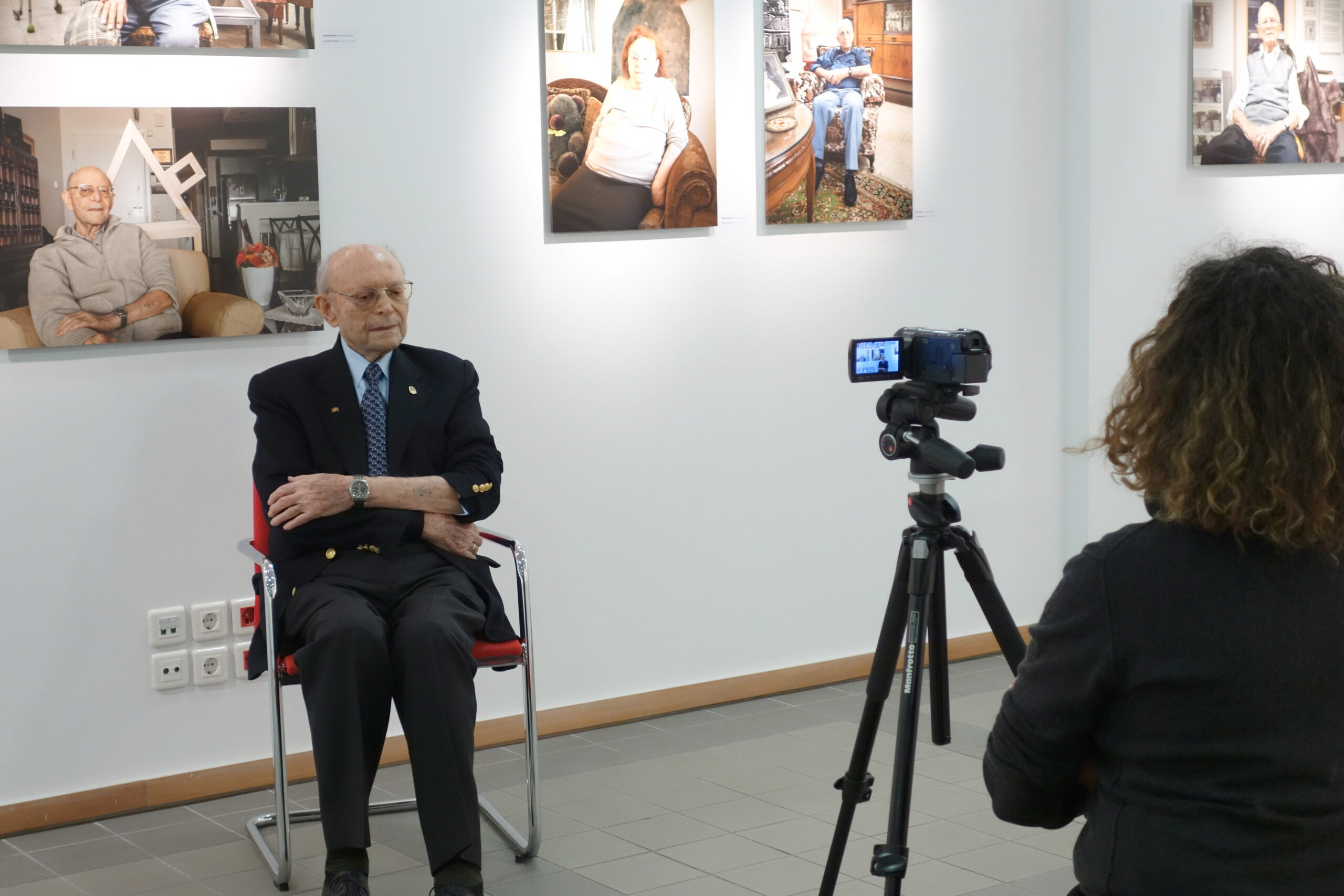
Heinz Kounio was interviewed by Artemis Alcalay in 2016, on the occasion of the “Greek Jews Holocaust Survivors: A Visual Narrative” exhibition at Instituto Cervantes in Athens. Alcalay had previously photographed Kounio in Thessaloniki in 2014. 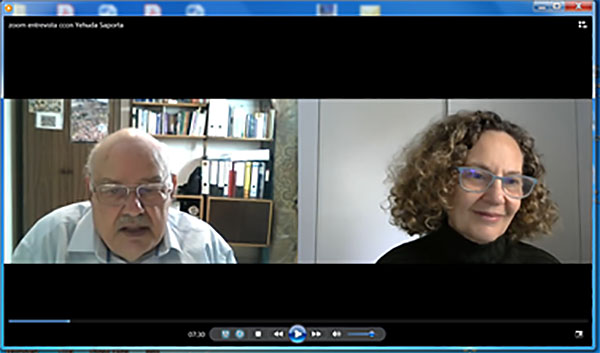
Yehuda Saporta, survivor of the Bergen-Belsen concentration camp, was photographed by Alcalay in Tel Aviv in 2014. In March 2021, Saporta was interviewed by Alcalay online.
Memories of their loved ones; stories from their birthplaces; concentration camp songs and other melodies; poems; memorable moments attesting to the horror of the concentration camps; traumatic experiences and above all stories of survival constitute an invaluable mosaic of life stories shared by the survivors in their discussions with the artist. In this video, Dario Sevi says goodbye to Artemis Alcalay by singing the old, beloved Sephardic song “Adio Kerida”. 19 April 2021.
Excerpts from the narratives of Corfiot Jews Holocaust Survivors, as recounted to Artemis Alcalay, are collected in this 11-minute-long video presented at the “Corfu | Homecoming” exhibition at the Corfu Synagogue (October – November 2020).